

By Alexander Hall
When I tell people I’m from St. Louis, I usually get one of two reactions: either they nod knowingly and mention a favorite place, or they ask, “Which neighborhood?” Because here, it really matters. The difference between feeling like an outsider and feeling like you belong often hinges on where you live—but more so on how that place shapes your days.
Stories in sidewalks, murals, and trees
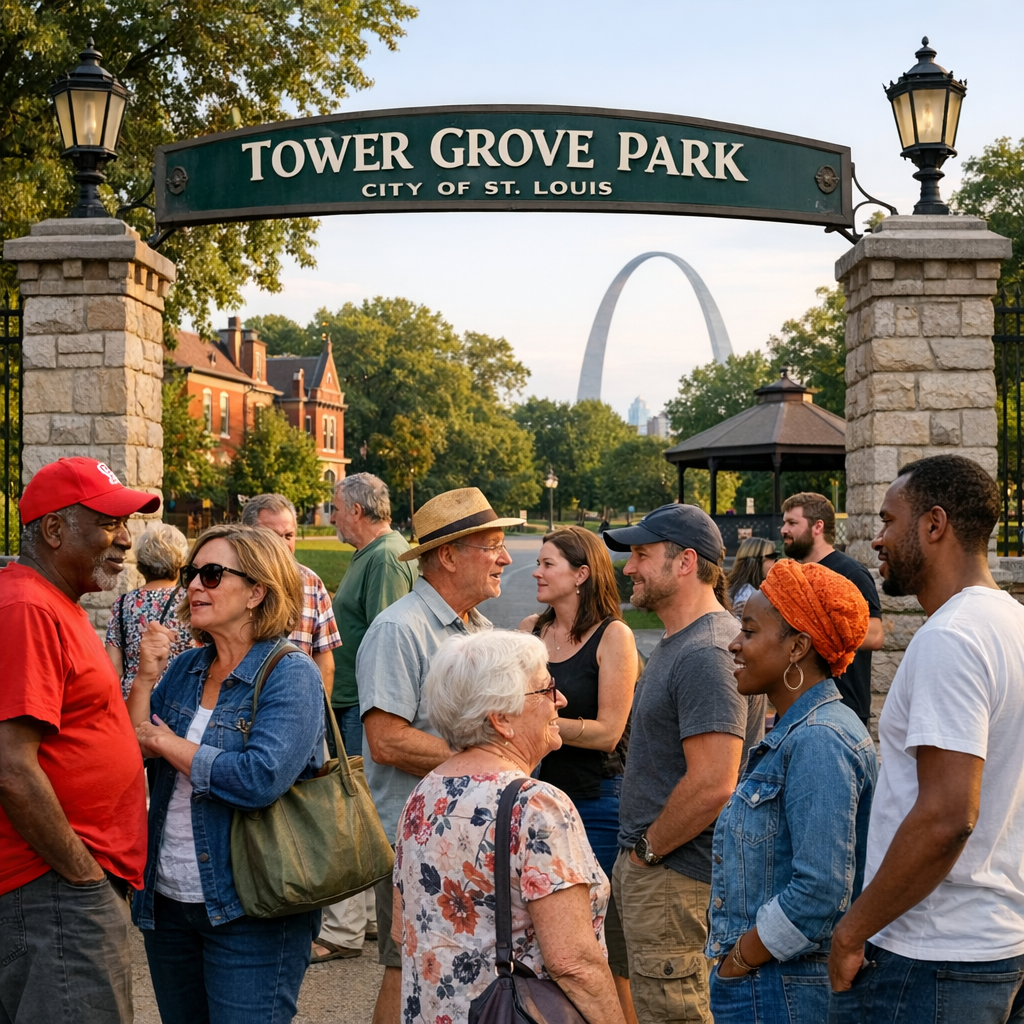
Take Shaw, the Hill, or parts of North City—each neighborhood has its own soundtrack. Maybe it’s church bells on Sunday, kids’ laughter spilling into the street, or the smell of barbeque at dusk. I’ve heard neighbors describe a sidewalk that catches the afternoon sun just right, making you pause on your walk home. Others point to murals that tell histories people don’t learn in classrooms, or vacant lots turned into gardens where neighbors grow tomatoes and share stories.
Where memories anchor you
One woman in West End told me that every time she passes the old movie theater, she recalls sneaking in behind her older siblings for the Saturday matinee. Another longtime Hill resident remembers learning to ride her bike under the big oak in the park—a tree she now attempts to protect as city development edges closer.
Belonging isn’t something you claim, it’s something you build
I’ve only recently felt like St. Louis is truly mine in pockets. Volunteering at a community cleanup, I met people in my zip code I’d never both live and working together to pull litter and talk about what’s alive in our neighborhood. Sharing a hot meal in someone’s home where talk turns to floodplains, street repairs, history, or prayers—the walls echoing concerns and laughter alike — that is how you build belonging.
Connection over convenience
Sure, proximity to transit, food, parks matter—but what really shapes attachment is who’s next door. The neighbor who checks on your mail, the store owner who remembers your name, families walking generations in the same house. There was a recent survey through “St. Louis Street Stories,” encouraging residents to share their everyday travel—walking, biking, riding transit—and in those stories, what rises to the top is people’s longing for safety, support, respect. That doesn’t come from roads; it comes from connections.
What can help all St. Louis feel more like home
- Preserve public spaces—parks, murals, fields—where stories are visible and alive.
- Support local schools, block clubs, and gathering spots where people of many backgrounds share food, ideas, hope.
- Promote inclusive development—so new housing or businesses help, not displace.
- Create platforms for “ordinary” stories: walking home, learning to ride, seeing growth and loss.
Belonging in St. Louis isn’t automatic. It’s a tribute to those who stay, those who return, those who build something small every day. If we want this place to feel like home for everyone, it means listening—to sidewalks, to children’s laughs, to elders. It means showing we care about the parts of us that often go unseen.