

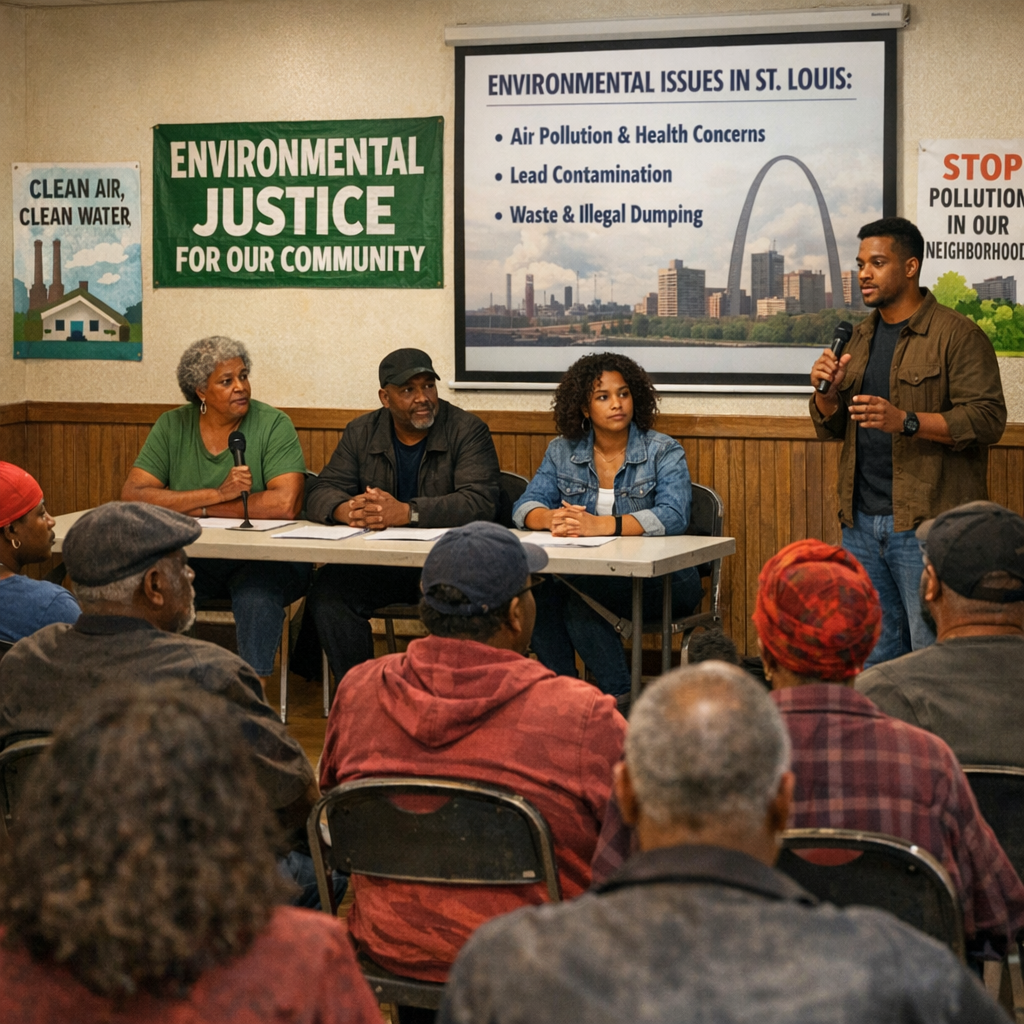
Recent findings from Washington University’s Interdisciplinary Environmental Clinic have shed light on enduring environmental hazards disproportionately affecting Black communities in St. Louis. The updated ‘Environmental Racism in St. Louis’ report highlights critical issues such as vacancy, illegal dumping, childhood lead poisoning, and air pollution, all of which contribute to significant health disparities.
Persistent Environmental Challenges
The report underscores that vacant properties remain a central concern, with over 24,000 vacant parcels concentrated in majority-Black neighborhoods. These areas often become sites for illegal dumping, exacerbating public health risks and diminishing community well-being.
Childhood lead poisoning rates have also risen in predominantly Black ZIP codes, raising alarms about long-term health impacts on children. Additionally, air quality issues continue to plague these communities, leading to higher incidences of respiratory problems and other health complications.
Community and Policy Responses
In response to these challenges, the City of St. Louis has initiated the Community Health Improvement Plan (CHIP), a strategic effort to address public health needs through community engagement and data-driven strategies. The CHIP aims to tackle health inequities by focusing on areas such as mental health services, substance abuse prevention, and improving access to healthcare resources.
However, community leaders emphasize that addressing environmental racism requires more than policy initiatives. It necessitates active participation from residents, local organizations, and government agencies to implement sustainable solutions. This includes investing in infrastructure improvements, enforcing environmental regulations, and fostering economic development in affected neighborhoods.
Moving Forward
While the challenges are significant, the resilience and advocacy of St. Louis’s Black communities offer a path forward. By acknowledging the systemic nature of these environmental issues and committing to collaborative action, the city can work towards a future where all residents have access to a safe and healthy environment.
Residents are encouraged to participate in community meetings, support local organizations addressing environmental justice, and hold policymakers accountable for implementing equitable solutions. Together, we can confront and overcome the legacy of environmental racism in St. Louis.