

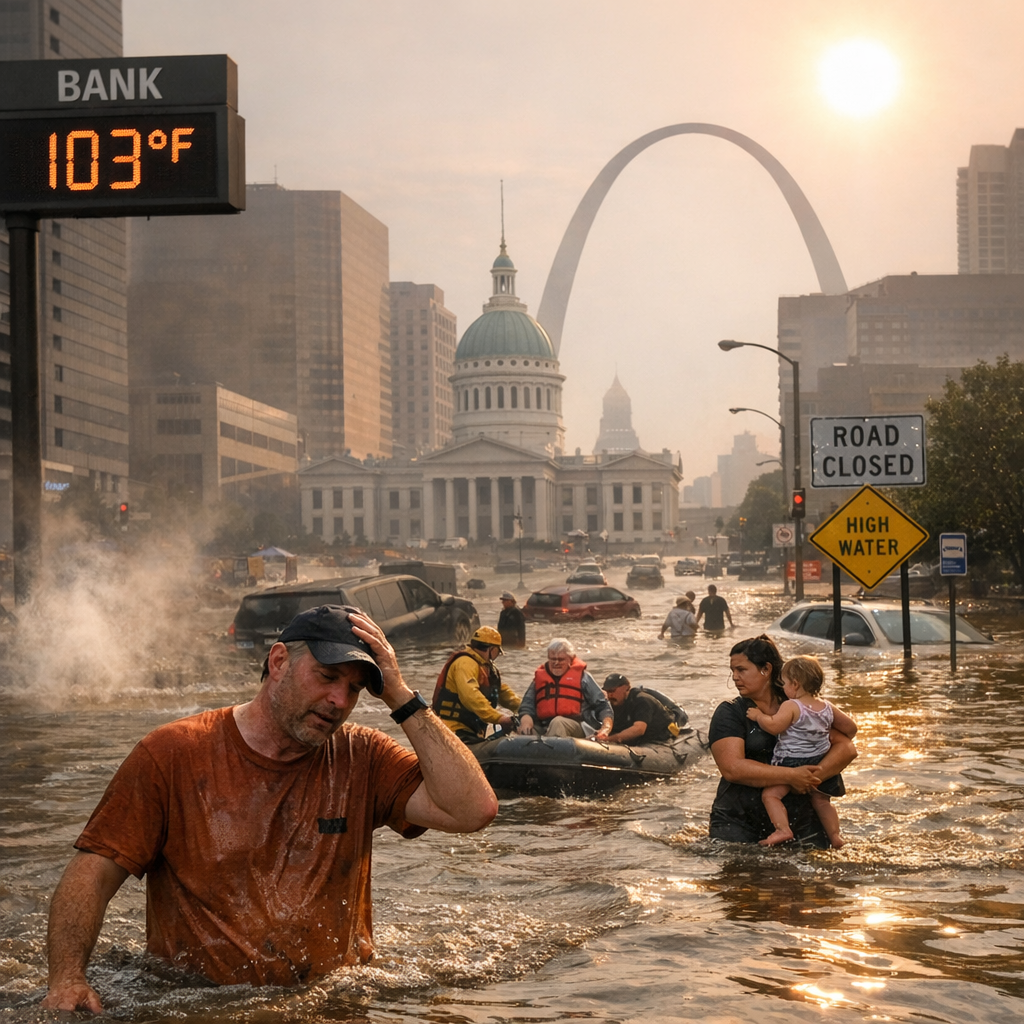
St. Louis, situated at the confluence of the Mississippi and Missouri Rivers, has long experienced a diverse climate. However, recent trends indicate significant changes that could impact our community’s health, infrastructure, and daily life.
Rising Temperatures and Heat Risks
Historically, St. Louis experienced about seven days annually with temperatures exceeding 96°F. Projections suggest this number could rise to approximately 44 days by 2050. Such increases pose health risks, especially for vulnerable populations, and can strain energy resources due to heightened cooling demands.
Increased Precipitation and Flooding
Annual precipitation in St. Louis is projected to increase from about 39.2 inches to approximately 41.0 inches by 2050. This uptick, coupled with more intense storms, elevates the risk of flooding, particularly in low-lying areas. Flood events can damage property, disrupt transportation, and pose safety hazards.
Community Initiatives and Adaptation
Recognizing these challenges, St. Louis has undertaken several initiatives. The city’s Climate Action & Adaptation Plan outlines strategies to reduce greenhouse gas emissions and enhance resilience. Additionally, the OneSTL Climate Action Summit convenes local stakeholders to discuss and implement sustainable practices.
Individual Actions Matter
Residents can contribute by adopting energy-efficient practices, supporting local sustainability programs, and staying informed about climate risks. Community engagement is crucial in building a resilient St. Louis prepared to face the evolving climate landscape.